

Make a Perimenopause Log
Constipation at midlife

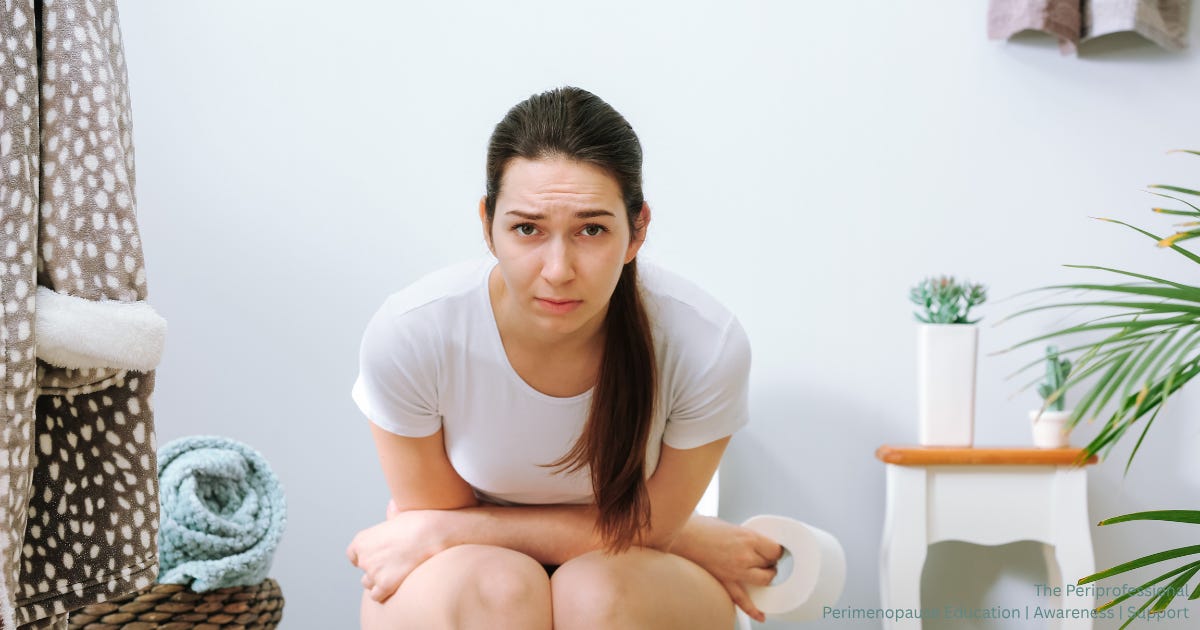
I couldn’t bring myself to do it. I had a whole different article planned for today about perimenopause journaling and symptom tracking, but after I dreamt up this title, I couldn’t let it go to waste and went with my gut reaction… let’s talk constipation. Sometimes you have to lean into your inspiration, and I’m not beyond a good potty conversation.
Like everything else in our bodies, estrogen has an impact on our digestion, either directly or indirectly, and one of the things that can be affected is our pooping schedule.
Both constipation and diarrhea are common during perimenopause, although hopefully not at the same time. However, the human body is a mystery; you can seem to have diarrhea and be constipated at the same time. Skid marks, anyone? If you don’t know what I’m talking about, I beg you not to Google it. Just smile, nod sweetly, and go along with what I’m saying.
What’s Normal?
I’m going to define normal as anything that you experience that’s a part of your regular operating system while you’re healthy. However, pooping once or twice a day is more ideal. It’s amazing how fast you can get backed up if you don’t regularly lighten your load.
If you’re still able to poop, but all that comes out are little rabbit pellets, you’re constipated. If you have to strain to poop, you’re constipated. If you poop and feel like you haven’t emptied completely, you’re constipated.
Constipation may seem inconsequential; however, it can become a medical problem. Severe constipation can cause urinary retention by blocking a woman’s ability to urinate. Backed-up stool can press on the bladder and urethra, effectively closing urine’s exit ramp. As you can imagine, this is extremely uncomfortable.
An acute (aka short-term) episode of constipation is very common for perimenopausal women, with some estimating that up to 50% of women experience it. Chronic constipation is diagnosed when it persists for more than 3 months. Chronic constipation also increases the risk of developing a uterine or vaginal prolapse (when your vagina literally sags or bulges outside of the vaginal canal). No one wants to be standing in the shower while holding their uterus.
Other issues can also arise, so it’s important to address chronic constipation before it causes other problems.
Reasons for Developing Constipation
There are many reasons for developing constipation, and we’re especially susceptible during perimenopause with the umbrella issue of our hormonal changes.
Pelvic floor dysfunction muscle tightness can cause you to lose your urge, poop “inefficiently”, or make it uncomfortable to go.
Slow digestive motor transit is the time it takes for your poop to move through your intestines. Estrogen plays a role in how fast this happens, with levels that are too high or too low slowing things down.
Medical conditions such as IBS-C (Irritable Bowel Syndrome - Constipation) or gastroparesis, which slows down the time it takes you to digest food, as well as slow transit. With gastroparesis, food ends up sitting in your stomach for far too long, causing heartburn, acid reflux, constipation, and other gastrointestinal issues.
Not enough fiber or TOO MUCH FIBER (the fibermaxxing crowd doesn’t like when I include this one, but too much fiber can slow down intestinal transit time).
Not enough hydration. Mild hydration can quickly lead to constipation.
A sedentary lifestyle
Disruption to your schedule (eating, sleeping, travel)
After writing this article, I started believing that the power of suggestion may also cause constipation
What Helps Constipation?
It’s super important to take your time eating during perimenopause. While we may have gotten away with cramming down food on the go in the past, our nervous system sometimes has difficulty with swallowing while going through perimenopause. It takes coordination to swallow (and well-chewed food), which we sometimes don’t always have if we’re not in a more relaxed state. Digestion starts in the mouth.
Dietary changes
Home remedies
Lifestyle changes
Medicines - there are several new prescription medications that help with constipation as well as IBS-C (Irritable Bowel Syndrome - Constipation).
Visit with a Registered Dietitian (RD) for diet suggestions
Pelvic floor physical therapy for pelvic floor dysfunction disorders
Addressing gut microbiome imbalances
Determining the underlying cause of the constipation and addressing the root issue
If you’re struggling with where to start, you’ll find meeting with me especially helpful. I can provide basic dietary suggestions, tried-and-true home remedies, and consistently helpful lifestyle changes.
You may have to poop alone, but you don’t have to face it alone.
Have perimenopause symptoms sprung on you?

I can help you feel better in 45 minutes by sharing everything you need to know about your unique perimenopause worries and concerns, offering tips to help manage your symptoms through lifestyle suggestions, and answering your questions.
👉 Virtual, Email, Audio, and Text Appointments available!
Learn more and book online using my HIPAA-compliant client portal.
Want to learn more on your own? Paid subscriptions to The Periprofessional will lead you on a path of perimenopause self-help where you’ll receive bonus advice and special support 💖 reserved for my consulting clients. Monthly and annual options available. Starting at $7/monthly, CANCEL anytime through your Substack account.
Be well, stay cool…

Shelby Tutty, MHA
Certified Perimenopause Educator and Coach
Founder of The Periprofessional, LLCSLT: Written by Me

I cannot do anything before I’ve had my coffee and morning poop. Interesting/helpful article. Thanks!
Travel gets me every time. Not as bad as it used to. My "go-to" is magnesium citrate during travel.
The nervous system has a lot to say about travel.